Buying ranch land in South Dakota can feel straightforward until you start asking one simple question: Where does the water come from, and do you have the right to use it? If you are looking at a property in or around Minnehaha County, that question matters more than many buyers expect. A well, a stock dam, or an irrigation setup may look like part of the ranch, but the legal right to use that water follows its own rules. In this guide, you will learn the basics of South Dakota water rights, what records to review, and what questions to answer before closing. Let’s dive in.
South Dakota water rights basics
In South Dakota, water in the state is owned by the people of the state. Most water use follows the rule of prior appropriation, which generally means the first person to file and put water to beneficial use has the senior right.
There is an important exception for domestic use. South Dakota gives domestic use the highest priority, and that category includes household needs, irrigation for a noncommercial garden up to one acre, stock watering, and limited public or recreation use.
That domestic exemption has limits. It generally ends if use goes over 25,920 gallons per day or 25 gallons per minute, and common distribution systems pumping 18 gallons per minute or less do not need a permit.
For ranch buyers, the big takeaway is simple: the water source, the use, and the paperwork all matter. A ranch may have working water improvements, but you still need to confirm whether the use is covered by a permit, a vested right, or a domestic exemption.
Why water rights matter in a ranch purchase
Water rights are not just a background detail in a ranch sale. They can affect how you run livestock, whether you can irrigate, whether a future well is realistic, and how much flexibility you have after you take ownership.
South Dakota keeps water-right records as public records, and those records can be used as evidence in disputes. The state also evaluates water availability through observation wells, stream gaging stations, and annual water-use reporting, which shows how seriously water administration is treated.
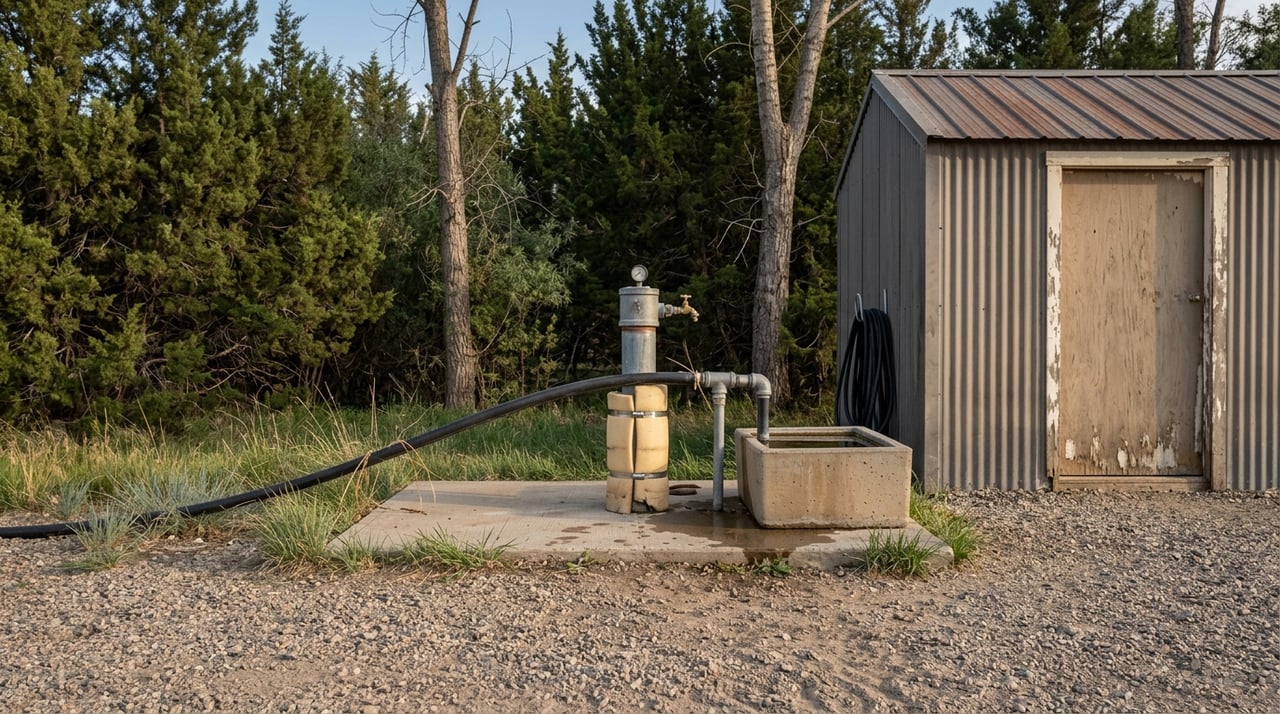
If a ranch includes wells, stock tanks, irrigation equipment, dams, dugouts, or pipelines, you should not assume the physical system tells the full story. The legal paper trail needs to match the actual use on the ground.
Domestic use versus permitted use
What counts as domestic use
For many ranch buyers, domestic use is the first category to understand. In South Dakota, domestic use includes household needs, stock watering, and irrigation of a noncommercial garden up to one acre.
That means some common ranch uses may not require a permit if they stay within the domestic limits. Still, once a system expands beyond those limits, the exemption may no longer apply.
When a permit is usually needed
Most non-domestic water uses require a permit or must qualify as a vested right. Irrigation is one of the clearest examples.
If you plan to irrigate fields, expand an existing system, or increase water use in a meaningful way, you should expect a formal review. South Dakota looks at whether unappropriated water is reasonably available, whether existing rights would be impaired, whether the use is beneficial, and whether it is in the public interest.
Surface water and groundwater on ranch land
Groundwater and wells
If a ranch relies on a well for more than domestic purposes, you should review the water-right status before drilling a new well or expanding the system. South Dakota requires permit applications to identify the source, amount, diversion point, annual period of use, and type of use.
When a water use involves a well, the application generally needs a well log or driller’s test log, and the well driller must be licensed. After approval, the permit holder has five years to build the project and four more years to put the water to beneficial use before filing a Notice of Completion of Works for inspection and licensing.
The state also warns against mining groundwater, which means pumping more annually than an aquifer’s average recharge. In some areas, aquifers have been designated as fully appropriated, which can limit the availability of new groundwater permits.
Surface water, dams, and dugouts
Stock watering may qualify as domestic use, but the storage structure itself can still need approval. That is an easy detail to miss during a property review.
In South Dakota, any dam or dugout on a navigable watercourse requires a water-right permit. A dam or dugout storing more than 25 acre-feet on a dry draw or nonnavigable watercourse also requires a permit.
A smaller dam or dugout storing 25 acre-feet or less on a dry draw or nonnavigable watercourse may be built without a permit if the owner files a location notice with the county Register of Deeds and the Water Management Board, and if the project does not change the course of water, interfere with rights, or flood another property.
Safety-of-dams rules can also come into play. Those rules apply to structures that are 25 feet or more in height or have 50 acre-feet or more of storage.
Older ranches can be a special case
Older South Dakota ranches sometimes have water uses that began before the current permit framework. Uses developed before March 2, 1955 for surface water or before February 28, 1955 for groundwater may qualify as vested rights.
That can make older properties more complex, not less. A water use may be real and longstanding, but the records may be less complete than what you would expect for a newer setup.
South Dakota notes that well-driller completion reports were not required before 1975. So if an older well does not appear in online records, that does not automatically mean the well is invalid. It does mean you should verify the history carefully with the state rather than make assumptions.
Water rights can be lost
One of the most important facts for buyers is that a water right can be vulnerable if it has not been maintained properly. South Dakota notes that rights can be lost through nonconstruction, abandonment, or three years of nonuse without a legal excuse.
This is one reason a ranch’s operating history matters. A seller may show you an old permit number, but you still need to know whether the right was perfected, maintained, and used consistently enough to stay in force.
Ownership changes matter too. If a water right is part of the transaction, any transfer of ownership must be filed with the South Dakota Department of Agriculture and Natural Resources within 90 days.
Records to request before closing
A good water-right review is part legal review, part fact-checking. You want documents that show what rights exist, where the water is diverted, and whether the rights line up with the ranch improvements you can see.
Ask the seller for:
- Water-right permit numbers or vested-right numbers
- Any notice of transfer of ownership
- Well completion reports
- Driller’s logs or test logs, if available
- Dry-draw location notices for dams or dugouts
- Irrigation questionnaires or annual reporting records, if applicable
- Any permit conditions, restrictions, or related correspondence
South Dakota provides searchable databases for water rights, wells, and dry-draw location notices. That gives you a way to compare the seller’s documents with the state’s records before you close.
Questions to ask about pipelines and system changes
Pipelines often create confusion because they can look like routine infrastructure updates. Legally, though, a pipeline change may or may not fit inside the existing right.
South Dakota allows certain diversion-point changes or additional diversion points without a new application or publication only if the source stays the same, no additional water is appropriated, no new irrigated land is added, and interference with existing diversions does not increase.
If a project would increase the rate of diversion or the volume of water used, that is treated as a new application and receives a new priority date. So if you are buying a ranch with a recently modified pipeline system, it is worth checking whether the paperwork still matches the current setup.
A practical due diligence checklist
Before you move forward on a ranch purchase in Minnehaha County or elsewhere in South Dakota, you should be able to answer a few plain-language questions.
Water source questions
- Where does the water come from?
- Is it groundwater, surface water, stored water, or a combination?
- Is the ranch using wells, stock dams, dugouts, pipelines, or irrigation diversions?
Use questions
- Is the water used for household needs, stock watering, irrigation, or another purpose?
- Does the current use fit within the domestic exemption?
- Has the seller discussed any planned expansion that could change the legal review?
Paperwork questions
- Is there a permit, vested right, or domestic exemption supporting each use?
- Do the diversion points and structures match the paperwork?
- Has any ownership transfer been filed properly?
- Is there any sign of nonuse, abandonment, or incomplete construction?
Why local, land-focused guidance helps
Water rights on ranch property are rarely something you want to figure out from a listing sheet alone. A property can have functioning improvements and still raise legal questions about use, priority, transfer, or future expansion.
That is why it helps to work with a land-focused brokerage that understands how water, infrastructure, and records fit together in a ranch transaction. Clear guidance can help you spot issues early, ask better questions, and move toward closing with more confidence.
If you are evaluating ranch land in South Dakota and want a practical, technically informed review of the property, NorthStar Realty can help you understand the moving parts and approach your purchase with clarity.
FAQs
What is the basic water-right rule for South Dakota ranch buyers?
- South Dakota treats water as property of the people of the state, and most uses are governed by prior appropriation, meaning the first person to file and beneficially use water generally has the senior right, except that domestic use has the highest priority.
What counts as domestic water use on a South Dakota ranch?
- Domestic use includes household needs, irrigation of a noncommercial garden up to one acre, stock watering, and limited public or recreation use, but the exemption generally ends if use exceeds 25,920 gallons per day or 25 gallons per minute.
When does a South Dakota ranch well need a water permit?
- If a well is used for more than domestic purposes, the use generally needs water-right review, and permit applications typically identify the source, amount, diversion point, annual period of use, and type of use.
Do South Dakota stock dams or dugouts need approval?
- Yes, in many cases they do. Any dam or dugout on a navigable watercourse requires a permit, and a dam or dugout storing more than 25 acre-feet on a dry draw or nonnavigable watercourse also requires a permit.
Can older South Dakota ranch water rights still be valid without modern records?
- Yes, possibly. Uses developed before March 2, 1955 for surface water or February 28, 1955 for groundwater may qualify as vested rights, and older wells may have limited online records because well-driller completion reports were not required before 1975.
What water-right records should a South Dakota ranch buyer request?
- Ask for permit or vested-right numbers, transfer notices, well completion reports, driller logs if available, dry-draw location notices, irrigation reporting if applicable, and any permit conditions or restrictions.
Can a South Dakota water right be lost through nonuse?
- Yes. South Dakota notes that rights can be lost through nonconstruction, abandonment, or three years of nonuse without a legal excuse.
What happens to water-right ownership after a South Dakota ranch sale?
- If a water right is transferred with the property, the transfer of ownership must be filed with the South Dakota Department of Agriculture and Natural Resources within 90 days.