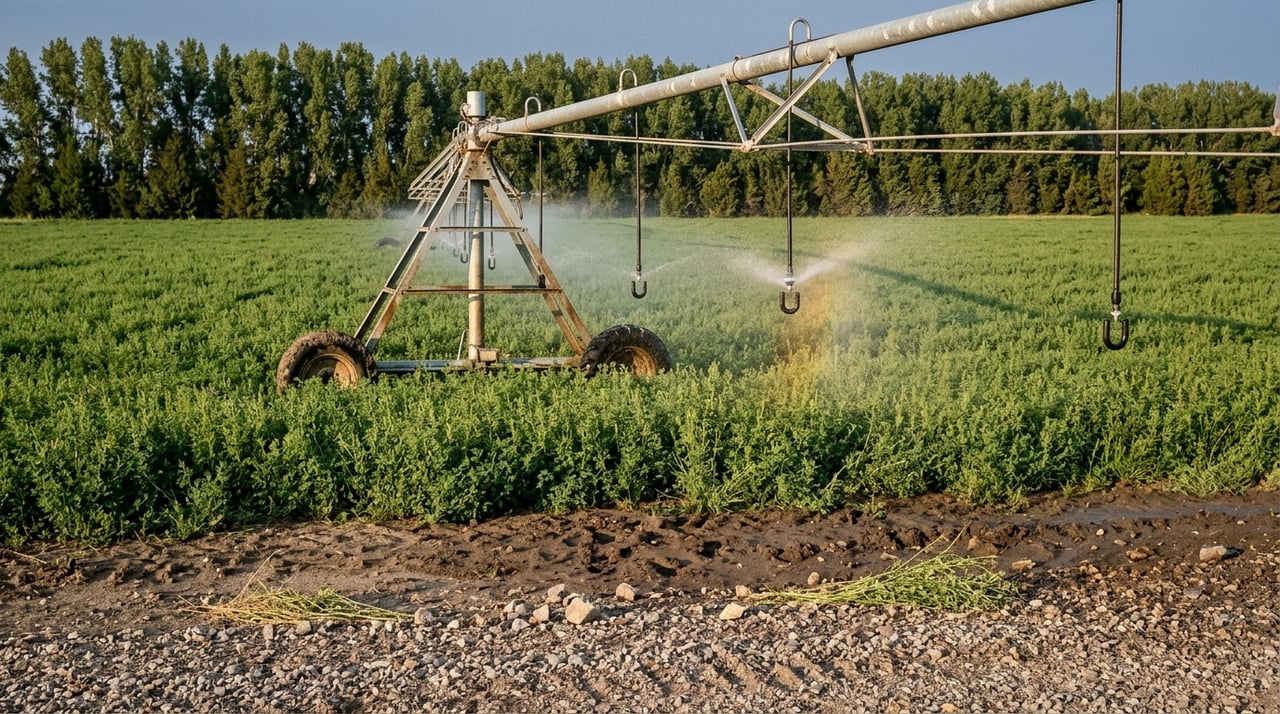
If you own farmland near Greeley, you already know one truth: not all acres are valued the same. In Weld County, a parcel’s worth can shift quickly based on irrigation, lease income, water availability, and how close it sits to municipal growth. If you are trying to understand what drives farmland values around Greeley, this guide will help you read the market more clearly. Let’s dive in.
Why Greeley farmland is different
Weld County sits in a unique position. It is one of Colorado’s major agricultural counties, but it is also seeing strong population growth, especially along the I-25 corridor and near municipalities like Greeley.
That matters because farmland here is shaped by two forces at once. On one side, you have farm and ranch fundamentals like production, grazing, and lease income. On the other, you have development pressure, water constraints, transportation impacts, energy activity, and land conversion affecting rural acreage.
The county’s farm base is large by any measure. According to the 2022 Census of Agriculture, Weld County had 3,881 farms, about 1.99 million acres in farms, 875,694 acres of cropland, 1,041,396 acres of pastureland, and 274,813 irrigated acres.
The county also produced about $2.38 billion in agricultural products sold. Livestock, poultry, and related products accounted for 82% of that total, while crops made up 18%, showing just how broad and active the local agricultural economy is.
Colorado farmland value benchmarks
A good starting point is the statewide benchmark data from USDA NASS for 2025. These figures do not replace a property-specific valuation, but they give you a useful frame for understanding the market.
2025 Colorado land values by type
| Land type | 2025 Colorado average per acre |
|---|---|
| Farm real estate | $2,290 |
| Cropland | $2,880 |
| Irrigated cropland | $6,850 |
| Non-irrigated cropland | $1,990 |
| Pasture | $1,150 |
All of these categories increased in 2025. Colorado farm real estate rose 4.1% from 2024, cropland rose 2.5%, irrigated cropland rose 3.5%, non-irrigated cropland rose 2.1%, and pasture rose 4.5%.
The clearest takeaway is the pricing gap between land types. Irrigated cropland averaged about 3.4 times the value of non-irrigated cropland and nearly 6 times the value of pasture, which tells you how strongly water and productivity separate price tiers in this market.
The three value tracks around Greeley
In practical terms, farmland around Greeley often falls into three broad value tracks. Understanding which track a property fits can help you make better buy, hold, lease, or sell decisions.
Irrigated production land
This is usually the highest-value agricultural land in the area. Secure irrigation water, productive soils, and delivery infrastructure support both current income and long-term utility.
When buyers compare farm ground, irrigated acres often stand apart because the water component affects operations, classification, and value. In a market like Weld County, that premium tends to hold up better than almost any other farmland feature.
Pasture and ranch ground
Pastureland follows a different pricing pattern. It is generally valued much lower per acre than irrigated cropland because income potential is usually lower and more tied to grazing economics and water access.
That does not make pasture unimportant. It simply means buyers and owners should evaluate it through a different lens, with more attention to carrying capacity, access to water, and local grazing demand.
Transition ground near growth
Some parcels near Greeley are not valued only as agricultural land. If a tract is close to municipal growth, services, or realistic annexation pathways, it may carry an added development component.
This is where the Weld County market becomes especially nuanced. A piece of land can still function as farm ground today while also drawing interest because of future potential tied to location, water, and planning context.
Lease rates offer another market signal
Land value is only part of the story. Lease rates can also help you understand how the market sees a property’s income-earning power.
CSU Extension notes that cash rents are tied to a parcel’s ability to generate income. It also cautions that county rent figures are survey averages and may include older leases, so they do not always match the current market for a specific property.
Weld County cash rent benchmarks
In Weld County, the 2023 cash-rent figures were:
- $178 per acre for irrigated cropland
- $29.50 per acre for non-irrigated cropland
- $5.40 per acre for pastureland
Those numbers sit close to the statewide average for irrigated rent and somewhat below the statewide average for dryland and pasture. That makes Weld a helpful local benchmark, especially if you are reviewing an existing lease or trying to estimate how the market may view a tract’s income profile.
A simple rent-to-value check also helps explain pricing differences. Using Weld’s 2023 rent figures against Colorado’s 2025 value benchmarks suggests rough gross ratios of about 2.6% for irrigated land, 1.5% for dryland, and 0.5% for pasture.
This is not a true cap rate, but it is a practical shorthand. It helps explain why irrigated parcels often support much stronger per-acre pricing than grazing land.
Why water matters so much
Around Greeley, water is not just an operational detail. It is one of the main drivers of value.
Colorado’s assessor guidance says agricultural land can qualify based on decreed water rights used for agricultural or livestock production. It also explains that irrigated land may be reclassified if irrigation water is no longer available.
That means water affects more than crop output. It also influences how land is classified and taxed, which can have a direct effect on how owners and buyers evaluate a parcel.
Water and development value
Water also plays a major role when farmland sits near future development paths. The City of Greeley states that all new developments must dedicate raw water, and the city accepts only certain water shares.
The city also says water rights purchased from other farms are not generally acceptable unless they are Colorado-Big Thompson units. For new single-family residential development, Greeley requires three acre-feet of raw water per acre.
These public rules help explain why some transition-acreage parcels can trade above pure agricultural value. If a tract is near growth and has a realistic path tied to acceptable water sources, that added flexibility can matter a great deal.
What can move farmland values up or down
Even within the same general area, two parcels can command very different prices. That is because farmland value depends on both broad market conditions and tract-specific details.
Market-wide drivers
Some value drivers affect nearly all landowners. These include interest rates, alternative investment returns, and the broader strength of agricultural economics.
When financing costs change, buyer behavior often changes with them. Even so, the Greeley area tends to remain especially sensitive to local water conditions and urban proximity.
Parcel-specific drivers
For an individual property, several factors tend to carry the most weight:
- Irrigation water security
- Land type, such as irrigated cropland, dryland, or pasture
- Existing lease structure and whether rent is near market
- Proximity to Greeley or other municipal growth areas
- Access to services and realistic annexation pathways
- Water rights or raw-water characteristics that may matter for future use
In Weld County, these details often matter more than the acre count alone. A similar-looking tract farther from growth pressure may trade very differently than one near the edge of expanding services.
How to think about your land today
If you own farmland around Greeley, the most useful question is not just, “What is land worth per acre?” The better question is, “What kind of land do I really own in today’s market?”
Questions worth asking
Start with a few practical questions:
- Is your irrigation water secure and usable?
- Is the property leased at market rate, below market, or above market?
- Is the tract close enough to growth that annexation or raw-water demand could matter?
- Does the current market support the highest and best use as agriculture, grazing, or transition land?
These questions can shape everything from pricing to timing. They also help you avoid comparing your property to the wrong type of acreage.
Why local analysis matters
A statewide average is helpful, but it cannot tell you whether your parcel carries a water premium, a lease upside, or transition potential near Greeley. In this market, technical details often make the biggest difference.
That is why farmland owners benefit from a land-specific review that looks at water, classification, planning context, and current income together. It gives you a more realistic picture of value than broad averages alone.
If you are weighing whether to hold, improve, lease, or sell farmland around Greeley, clear land analysis can help you make the next move with confidence. The team at NorthStar Realty brings land-focused experience in agricultural acreage, development tracts, water-related transactions, and technical property marketing across Northern Colorado.
FAQs
What is driving farmland values around Greeley, Colorado?
- Farmland values around Greeley are shaped by irrigation water, lease income, land type, and proximity to municipal growth, along with broader factors like interest rates and agricultural economics.
How much is irrigated cropland worth in Colorado in 2025?
- USDA NASS reported Colorado irrigated cropland at an average of $6,850 per acre in 2025.
How does pastureland compare to cropland in Weld County area valuations?
- Pastureland generally carries much lower per-acre value than cropland, especially irrigated cropland, because its income potential is usually lower and more tied to grazing economics and water access.
Why do water rights matter for Greeley-area farmland value?
- Water rights matter because water affects productivity, agricultural classification, and in some cases future development potential, especially near municipal growth areas.
What are Weld County cash rents for farmland?
- Weld County’s 2023 reported cash rents were $178 per acre for irrigated cropland, $29.50 per acre for non-irrigated cropland, and $5.40 per acre for pastureland.
How can you tell if farmland near Greeley has transition value?
- A tract may have transition value if it is near growth, services, or realistic annexation pathways and if water and planning conditions support future development interest beyond current agricultural use.