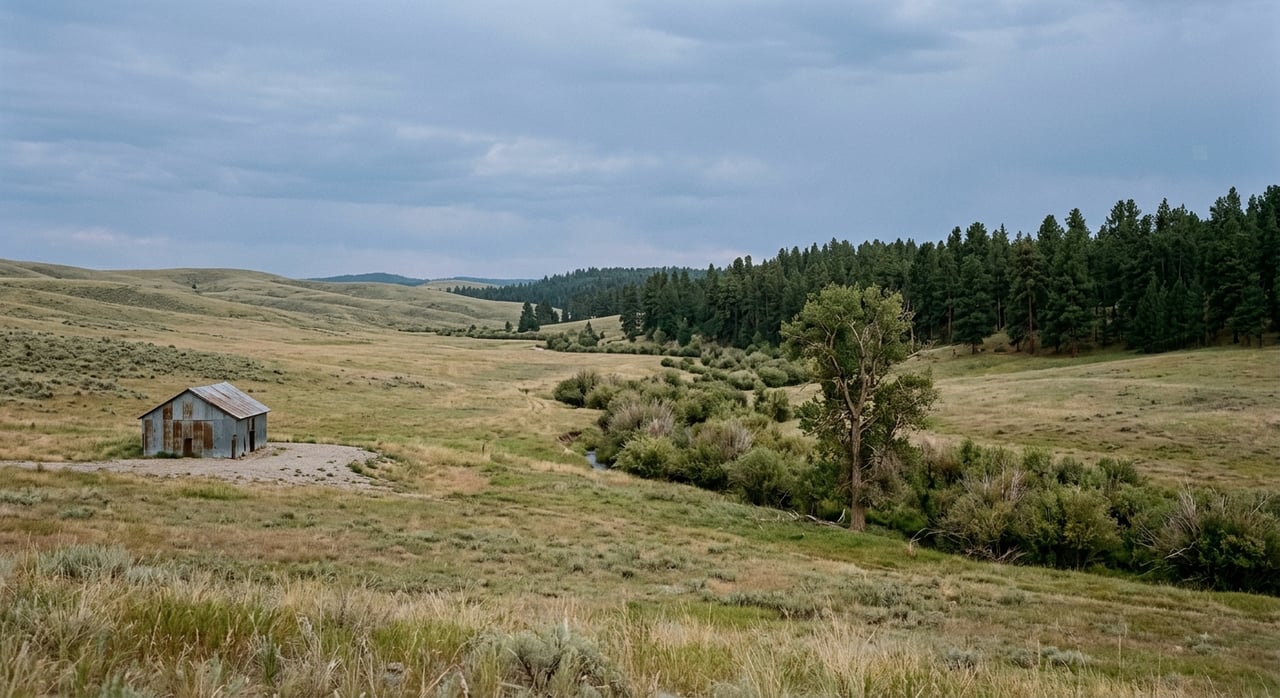
If you are comparing ranch land in western South Dakota, it helps to know that not all West River ground trades for the same reasons. A scenic tract near the Black Hills can attract a very different buyer than open rangeland on the plains, even when both are used for grazing. When you understand how each regional submarket works, you can price, search, and negotiate with more confidence. Let’s dive in.
Western South Dakota Market Basics
The clearest statewide benchmark for 2025 comes from the SDSU Extension Farm Real Estate Survey. For western South Dakota, the survey mainly breaks the market into two broad reporting regions: Northwest and Southwest. That matters because most land west of the Missouri River is pasture or rangeland, while East River land is more crop-oriented.
The survey also notes that regional averages are not parcel appraisals. Actual value can shift based on location, soil type, topography, water depth, climate, and access. If you are looking at a specific ranch, those details can move the number in a meaningful way.
2025 Ranch Value Snapshot
Here is the broad 2025 benchmark for western South Dakota ranch-oriented land:
| Region | Pasture/rangeland value per acre | Pasture/rangeland rent per acre |
|---|---|---|
| Northwest | $959 | $26 |
| Southwest | $1,117 | $25 |
For context, those values sit far below East River land benchmarks. The same 2025 SDSU survey shows pasture and rangeland values statewide rose 7.6% in 2025, while non-irrigated cropland rose 1.1%. In simple terms, the ranch side of the market stayed firmer than the crop side.
County rent data helps confirm that pattern. In 2024, USDA NASS reported pasture rents of $15 in Pennington County, $13 in Custer and Fall River, $13.50 in Lawrence, $17 in Meade, $16 in Perkins, $14 in Dewey, and $8 in Oglala Lakota. That is well below east-river benchmark counties such as Minnehaha, Moody, and Lake, where pasture rents were roughly $69 to $72.50 per acre.
Three Western South Dakota Submarkets
The most useful way to compare ranch markets in western South Dakota is by submarket, not just by broad region. Public data supports a simple framework: Black Hills fringe, foothill country, and eastern plains or open rangeland.
Black Hills Fringe
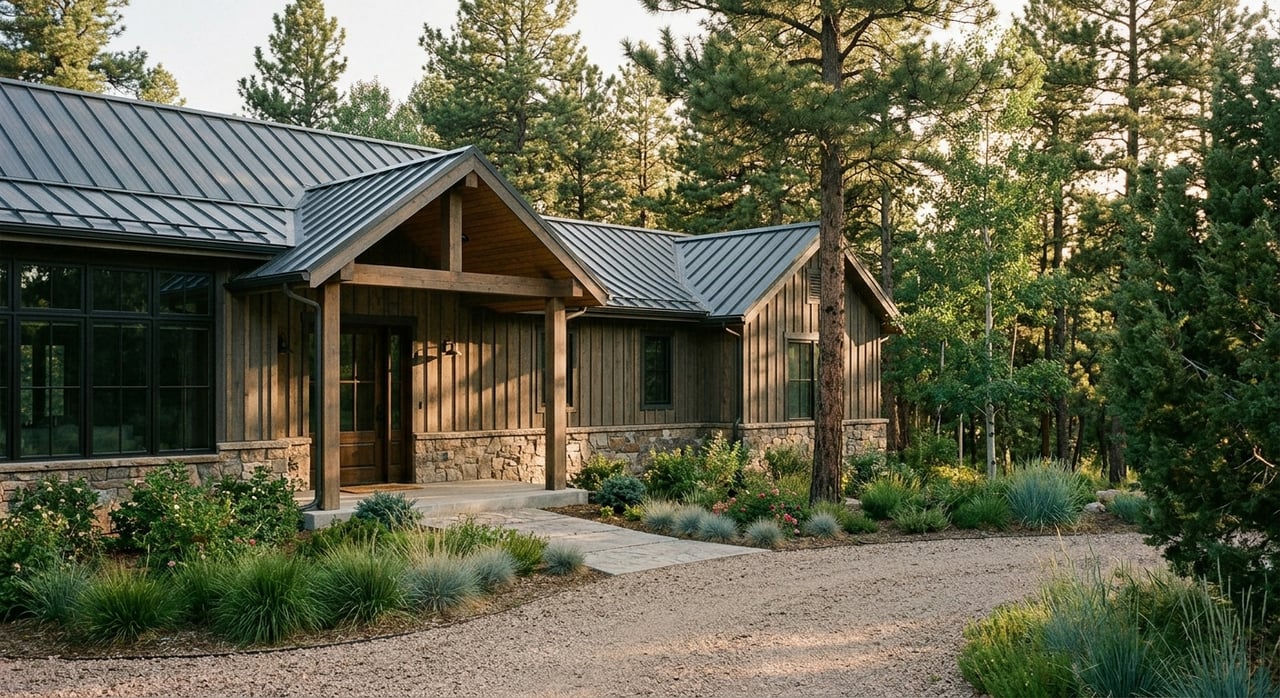
The Black Hills fringe often behaves differently from a pure cattle market. The Black Hills National Forest spans about 1.2 million acres and includes more than 3,800 miles of roads and trails, including over 700 miles of OHV system trails. That larger landscape adds scenery, recreation, and access to a market that might otherwise be judged mainly on forage.
This area can draw several types of buyers. Working operators are still active, but so are recreation-minded buyers, hunting buyers, and people looking for scenic or legacy ownership. Parcels near timber, varied terrain, and public land often appeal to a broader audience than standard open grass ranches.
Water and habitat can also influence this submarket. SDSU notes that Black Hills streams differ from prairie streams because of their groundwater connections and their ability to support cold-water fisheries such as trout. In practical terms, that can make certain properties feel more like amenity land with ranch utility than production ground alone.
Foothill Country
The foothill and transition belt is often a hybrid market. Buyers still care about cattle function, but they also pay close attention to water, draws, riparian condition, access, horses, wildlife, and seasonal recreation.
This matters because western South Dakota prairie streams are often intermittent or ephemeral rather than year-round. Large perennial rivers are limited in West River grasslands, while smaller stream systems occur on many ranches. That means a property’s water layout and land improvements can matter as much as raw acreage.
Buffalo Gap National Grassland helps explain why this belt can feel mixed-use in buyer appeal. The area supports uses such as hiking, horseback riding, hunting, OHV riding, and rockhounding. So while cattle value remains central, recreational features can push one foothill property ahead of another.
Eastern Plains and Open Rangeland
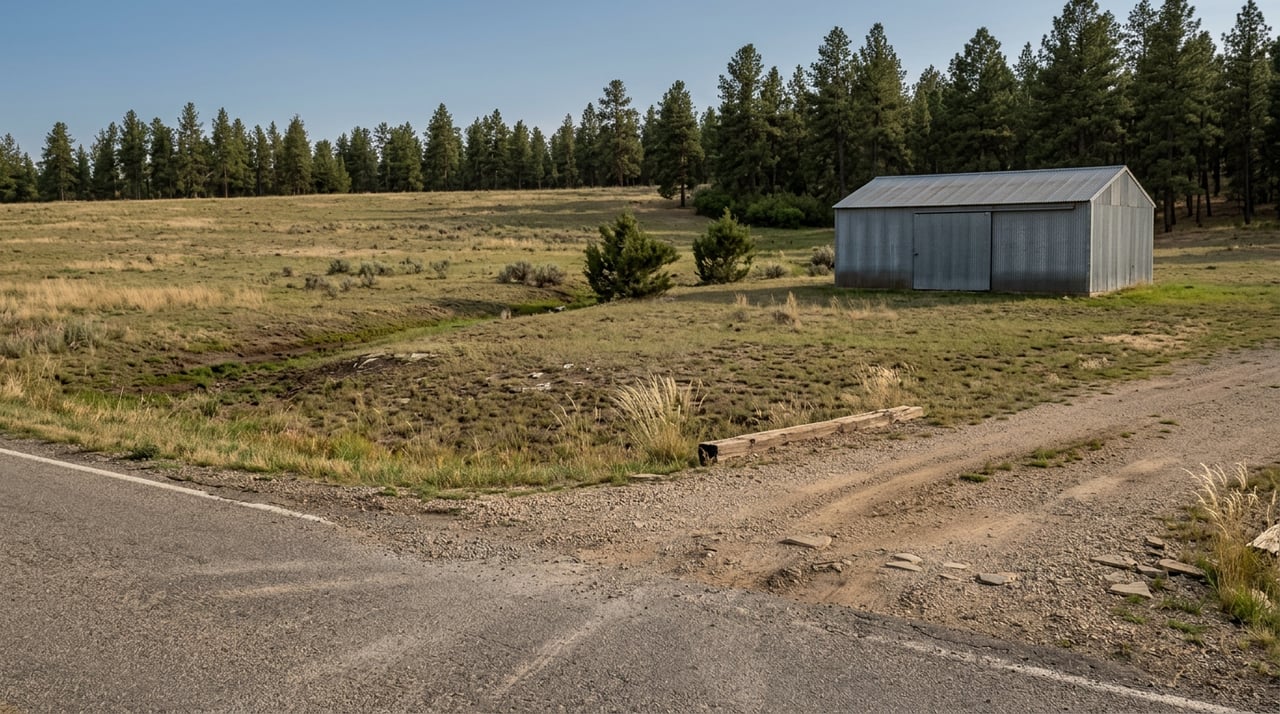
The open plains portion of western South Dakota is the most production-driven part of the ranch market. Here, buyers tend to focus first on carrying capacity, fence condition, water placement, and year-round access.
This is where the western benchmark numbers often align most closely with market behavior. In 2025, pasture and rangeland averaged $959 per acre in the Northwest and $1,117 in the Southwest, with rents of $26 and $25 per acre. Compared with East River land, those numbers show a market still anchored in grazing economics rather than crop income or strong amenity pricing.
That does not mean one open-range ranch is interchangeable with another. It means pricing usually stays tied more closely to operational usefulness than to scenic or recreational appeal.
What Drives Ranch Pricing by Region
Even though each submarket behaves differently, a few core factors show up again and again in western South Dakota ranch values.
Productivity and Soils
South Dakota assesses agricultural land on a productivity basis. According to the South Dakota Department of Revenue, the assessment system can consider location, size, soil survey statistics, terrain, topographical condition, surface obstruction, climate, and accessibility.
That framework matters because it reflects how ranch buyers think. Even when a parcel has scenic or recreational upside, productive capacity still shapes value. If you are comparing two ranches, soils, slope, and usable grazing acres remain central to the discussion.
Water Infrastructure
Water is one of the biggest differentiators in western South Dakota ranch land. SDSU Extension states that placement of water is probably the single most important factor affecting grazing distribution. It also notes that forage use drops quickly beyond about 800 to 1,000 feet from a water source.
That is why pipelines, tanks, fencing, and other range improvements can have an outsize effect on value. In areas where perennial water is limited, practical infrastructure can improve grazing efficiency and make a ranch easier to operate. Buyers in every western submarket tend to look hard at this.
Recreation and Public-Land Adjacency
Recreation value is not equal across all western South Dakota ranches, but it is important in the right setting. South Dakota Game, Fish and Parks reports more than 5 million acres of hunting opportunity on public land and private land leased for public hunting. It also notes that about 80% of the state is privately owned.
That makes adjacency and access meaningful, especially near the Black Hills and Buffalo Gap area. A parcel with scenic terrain, hunting potential, or useful proximity to public land may attract more than one buyer profile. When that happens, pricing can become less tied to simple forage math.
Supply and Market Tone
The 2025 SDSU survey points to a firm but more selective market. The strongest positive influences included limited land supply, parcels that help operators expand, strong cash on hand, and strong cattle prices.
At the same time, buyers are underwriting more carefully than during faster-growth periods. That means quality still gets rewarded, but not every ranch will earn the same premium. Details matter.
How Buyers Differ by Region
If you are buying or selling, it helps to know who is most likely to compete for a property.
Local Operators Still Lead Overall
The most direct buyer profile identified in the SDSU survey is the local operator. The report says most buyers are local farmers, and expansion of an existing operation remains one of the most important demand drivers.
In western South Dakota, that often means neighboring ranchers, nearby family operations, or buyers who can immediately fold the land into their grazing base. This is especially true in the more production-first submarkets.
Black Hills Fringe Draws Wider Demand
The Black Hills fringe tends to attract the broadest buyer pool. In addition to traditional ranch operators, you may see interest from hunting buyers, recreation buyers, and out-of-area buyers looking for privacy, scenery, or long-term ownership.
That wider demand can support stronger pricing for the right property. It can also change how a ranch should be marketed, because lifestyle and access features may matter almost as much as cattle function.
Foothill Buyers Often Want Both
Foothill-country buyers are often looking for balance. They want working cattle ground, but they also care about horses, wildlife, water distribution, and seasonal recreation.
Because streams are often intermittent and improvements can strongly affect utility, these buyers tend to study infrastructure carefully. A ranch with better-developed water and fencing may stand out quickly.
Open Plains Buyers Focus on Utility
On the eastern plains and open range, buyers usually lead with production logic. They tend to underwrite carrying capacity, access, water, and fences before they give much weight to amenity value.
That makes these properties more straightforward to compare, but not simple to value. Small differences in improvements or land condition can still change buyer interest in a meaningful way.
What This Means for Buyers and Sellers
If you are buying, the key is to match the property to your purpose. A Black Hills fringe ranch may justify a different price logic than an open-range grazing unit because the buyer pool is broader. A foothill property may need closer review of water layout and improvements than the acreage total alone suggests.
If you are selling, regional framing matters. Not every western South Dakota ranch should be presented as the same kind of asset. The strongest marketing strategy often starts by identifying whether your property is primarily amenity-driven, hybrid, or production-first.
That is where land-specific analysis becomes valuable. When you understand soils, access, water placement, improvement quality, and the local buyer profile, you can position a ranch more accurately in the market.
Western South Dakota ranch land is not one market with one set of rules. It is a collection of related submarkets shaped by production, water, scenery, recreation, and buyer intent. If you want help evaluating how a ranch fits within that landscape, NorthStar Realty offers land-focused guidance grounded in regional market knowledge and technical understanding.
FAQs
How do western South Dakota ranch values compare by region?
- In the 2025 SDSU Extension survey, pasture and rangeland averaged $959 per acre in the Northwest region and $1,117 per acre in the Southwest region.
What makes the Black Hills fringe ranch market different?
- The Black Hills fringe often attracts both traditional ranch buyers and amenity-minded buyers because of scenery, recreation access, timbered terrain, and proximity to public land.
Why does water matter so much on western South Dakota ranches?
- SDSU Extension says water placement is one of the most important factors in grazing distribution, and forage use drops quickly beyond roughly 800 to 1,000 feet from a water source.
Are western South Dakota ranch buyers mostly local operators?
- Yes. The 2025 SDSU survey says the majority of buyers are local farmers, and expansion of an existing operation remains a major demand driver.
What is the most production-driven ranch submarket in western South Dakota?
- The eastern plains and open-rangeland areas are generally the most production-first, with buyers focused on carrying capacity, fencing, water, and access.
How should you compare two western South Dakota ranch properties?
- Look beyond acreage and compare productive capacity, soils, topography, water infrastructure, access, improvements, and whether the property fits an amenity, hybrid, or production-driven submarket.